Choosing the right mouse pad is often an overlooked detail in crafting the perfect workspace or gaming setup, yet it profoundly impacts your daily interactions. Whether you’re a competitive gamer demanding pixel-perfect precision or a professional seeking ergonomic comfort during long hours, the surface beneath your mouse plays a critical role. This comprehensive guide will dissect the fundamental differences between large mouse pads and hard mouse pads, exploring their unique advantages, disadvantages, and ideal applications to help you uncover the true winner for your specific needs and preferences.
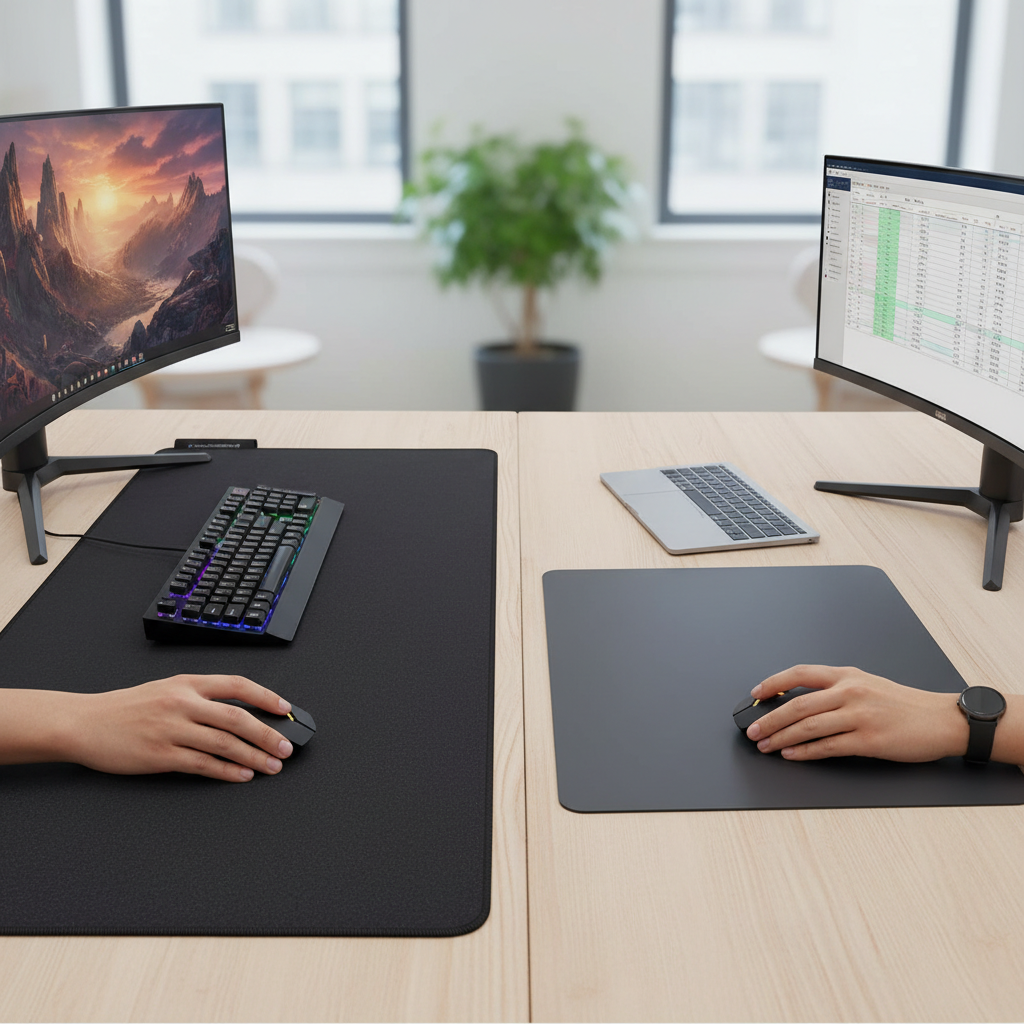
The Perfect Mouse Pad Choice: A Detailed Guide
Selecting the ideal mouse pad involves more than just aesthetics; it’s about optimizing performance, comfort, and durability. Both large (typically soft, cloth-based) and hard mouse pads offer distinct experiences, each catering to different priorities. Understanding these nuances is key to making an informed decision that elevates your computing experience, whether you’re navigating complex spreadsheets or executing clutch plays in your favorite game.
Large Mouse Pad Size: Why Bigger Often Means Better
|
Our Picks for the Best Large mouse pad in 2026
As an Amazon Associate I earn from qualifying purchases.
|
||
| Num | Product | Action |
|---|---|---|
| 1 | Mouse Pad, Large Gaming Mouse Pad with Double Stitched Edges, 14.9 x 11.7 inches Premium-Textured & Waterproof Mousepad, Nonslip Natural Rubber Base Mouse pad for Laptop,Computer, Office, Black |

|
| 2 | Amazon Basics Large Extended Computer Rectangular Mouse Pad, 16.7 x 35.7 inch, Black |
|
| 3 | TEDNETGO Large Gaming Mouse Pad, Waterproof Extra Large Big Mouse Pad with Stitched Edge, XXL Non-Slip Black Computer Long Mousepad Desk Mat for Gamer, Office & Home, Black |
|
| 4 | Razer Gigantus V2 Cloth Gaming Mouse Pad (XXL): Thick, High-Density Foam - Non-Slip Base - Classic Black |
|
| 5 | SteelSeries QcK Large Gaming Mousepad — Black — Non-Slip Silicone Rubber Base — Peak Tracking and Stability — Optimized for Gaming Sensors — 490 mm x 420 mm — FPS, MOBAs, RTS, MMO |
|
| 6 | Large Extended Gaming Mouse Pad with Stitched Edges, (31.5X15.7In) Durable Non-Slip Natural Rubber Base, Waterproof Computer Keyboard Pad Mat for Esports Pros/Gamer/Desktop/Office/Home-Black |
|
| 7 | SteelSeries QcK Gaming Mouse Pad - XXL Cloth - Peak Tracking and Stability - Esports Mousepad - Never-Slip - Full Desk Coverage |
|
| 8 | KTRIO Large Gaming Mouse Pad Desk Mat, Superior Micro-Weave Cloth for Precise Mouse Control, Non-Slip Rubber Base, Stitched Edges, Water-Resistant, for Gamer, Office & Home, 31.5" x 11.8" inches |
|
| 9 | Large Gaming Mouse Pad, 31.5x15.7 inch Large Extended Computer Keyboard Mouse Mat, Water Resist Non-Slip Mousepad Rubber Base Long XXL Desk Mouse Pad for Work & Gaming, Office & Home, Black |
|
| 10 | Aothia Non-Slip Waterproof PU Leather Desk Pad Protector for Mouse, Writing Desk, Office, Home, Laptop Blotter, 23.6" x 13.7", Black |
|
Larger mouse pads, often extending to cover both your keyboard and mouse, provide an expansive, unified surface that significantly enhances both comfort and operational freedom. This generous space ensures that even users with very low mouse sensitivity can execute wide, sweeping movements without ever lifting their mouse or running off the edge of the pad. The benefits are immediately apparent, reducing strain during extended sessions and fostering a more natural, fluid motion.
Common large mouse pad dimensions can range from 900x400mm (approximately 35×16 inches) to even larger desk-covering sizes, providing ample room not just for the mouse but also for the keyboard and other peripherals. This integrated surface can improve keyboard stability and even acoustics for mechanical keyboards. Large mouse pads are particularly beneficial for gamers who prefer low DPI settings, allowing for expansive arm movements crucial for precision. They also appeal to professionals who appreciate a clean, organized desk aesthetic and the added protection for their desk surface against scratches and spills.
Types of Large Mouse Pad Surfaces: Pros and Cons
Large mouse pads primarily feature cloth or hybrid surfaces, each offering unique performance characteristics for various user preferences.
-
Cloth Surfaces: These are the most common type for large mouse pads, made from woven fabric with a foam or rubber base. They excel at providing excellent control and precision due, in part, to their higher friction. This makes them a favorite among FPS (First-Person Shooter) gamers who value micro-adjustments and stopping power. Cloth pads also offer a softer, more cushioned feel, which significantly contributes to wrist and forearm comfort during prolonged use, mitigating fatigue. However, they can accumulate dust and sweat, making them harder to clean than their rigid counterparts, and may exhibit more drag during very rapid mouse movements.
-
Hybrid Surfaces: Blending the characteristics of both cloth and hard pads, hybrid surfaces aim to offer the best of both worlds. They typically feature a finely textured fabric layer over a firmer base, or a surface infused with materials like glass. This design allows for faster glide than traditional cloth pads while retaining a degree of control. Hybrid pads strike a balance, offering a slicker feel for speed yet enough texture to maintain precise tracking. They often boast improved durability and easier cleaning compared to pure cloth pads, making them a versatile choice for gamers and users who need both swiftness and accuracy. The Razer Strider Chroma is a notable example, combining speed and control with water resistance.
Hard Mouse Pad Surfaces: Speed and Durability
Hard mouse pads, crafted from rigid materials like plastic, aluminum, or glass, are engineered for maximum speed and consistent glide, making them the preferred choice for specific user demands.
-
Plastic Surfaces: Often made from polypropylene, plastic hard pads provide a consistently smooth and low-friction surface. This enables extremely fast mouse movements with minimal effort, ideal for competitive gamers who prioritize rapid flick shots and quick tracking in games like fast-paced FPS titles. Plastic pads are generally durable and easy to clean, resisting spills and sweat accumulation. Their rigid nature, however, offers little to no cushioning, which can lead to discomfort during extended sessions and may cause faster wear on mouse feet.
-
Aluminum and Glass Surfaces: These premium hard mouse pads take speed and durability to the next level. Aluminum offers an exceptionally smooth and cool-to-the-touch surface, providing an almost frictionless glide. Glass mouse pads, like the Razer Atlas, are renowned for their ultra-smooth, matte finishes, meticulously micro-etched for optimal optical sensor tracking and silent swipes. Both materials are incredibly durable, resistant to wear, and remarkably easy to clean – a quick wipe is often all that’s needed. The primary trade-off is typically cost and comfort, as their absolute rigidity provides no ergonomic cushioning, potentially causing wrist strain over long periods. Additionally, their inherent inflexibility means they cannot be made in very large, desk-covering sizes without becoming fragile and difficult to ship.
Material of Mouse Pads: Durability and Comfort
The underlying material significantly influences a mouse pad’s performance, feel, and longevity. Both soft and hard pads rely on specific materials to achieve their characteristic traits, balancing durability with user comfort.
- Natural Rubber (for soft pads): Natural rubber is a common choice for the base of soft mouse pads, providing exceptional grip to prevent slipping on your desk during intense use. Its inherent elasticity also contributes to the pad’s overall cushioning, enhancing comfort. While durable, the cloth surface layered above it will typically be the first point of wear.
- Synthetic Rubber/Foam (for soft pads): Often used in more budget-friendly soft pads, synthetic rubber or foam cores offer good cushioning and flexibility. They are easy to manufacture in various sizes and thicknesses. These materials help reduce wrist fatigue and absorb impacts, but their long-term durability can vary, and they may be more prone to showing wear and tear over time.
- Plastics (for hard pads): Polypropylene and other polymers are widely used for hard mouse pad surfaces. These plastics are chosen for their low-friction properties, providing a fast and consistent glide. They are durable, water-resistant, and incredibly easy to clean. However, they lack cushioning and can contribute to the wear of mouse skates.
- Metals (e.g., Aluminum for hard pads): Aluminum mouse pads offer a sleek, premium feel with exceptional durability. They provide an extremely fast glide and are resistant to bending and warping. While they are very long-lasting and simple to maintain, their complete lack of flex means zero cushioning and a potentially colder feel under the hand.
- Glass (for hard pads): Tempered glass mouse pads represent the pinnacle of speed and consistency for hard surfaces. They offer an unparalleled ultra-low friction glide, optimized for modern optical sensors. Glass pads are highly durable and easy to clean, but are the most rigid option, providing no comfort, and can be susceptible to shattering if dropped or struck with sufficient force.
Comparing Popular Mouse Pad Brands
The market offers a wide array of mouse pads from reputable brands, each with its unique approach to design, materials, and target audience. Understanding the strengths of leading manufacturers can help narrow down your choice.
SteelSeries: Renowned for their high-quality gaming peripherals, SteelSeries offers the popular QcK series, primarily known for its extensive range of cloth mouse pads. The QcK pads are celebrated for their micro-woven cloth surfaces, offering excellent control, consistent tracking, and durable stitched edges. They come in various sizes, from medium to XXL, catering to different desk sizes and playstyles. SteelSeries QcK Heavy, for instance, provides extra thickness for enhanced comfort and stability.
Razer: A titan in gaming hardware, Razer provides both soft and hard mouse pads. Their Gigantus V2 line offers soft, large-format mouse mats with textured micro-weave cloth surfaces designed for balanced speed and control, cushioning the wrist for long sessions. For speed enthusiasts, Razer offers hard pads like the Firefly V2 Pro (with RGB lighting) and the Razer Atlas, a tempered glass mouse pad known for its ultra-smooth, low-friction surface and exceptional durability. Razer also ventures into hybrid surfaces with the Strider Chroma, balancing speed with control.
Logitech: Logitech’s gaming division, Logitech G, produces reliable mouse pads for various needs. The Logitech G440 is a popular hard gaming mouse pad, featuring a low-friction polypropylene surface engineered for high-speed gaming and enhanced cursor accuracy. It’s designed to provide consistent tracking performance, particularly optimized for Logitech G mouse sensors. For soft pads, Logitech offers options that prioritize comfort and quiet operation.
Corsair: Corsair offers a selection of gaming mouse pads, including the MM350 Pro (soft) and the MM500 v2 Extended (a large desk pad). Their soft pads typically feature durable cloth surfaces with anti-fray stitched edges and anti-slip rubber bases. Corsair’s range often focuses on balancing control and speed, providing robust options for various gaming genres and general use.
Glorious: Glorious PC Gaming Race is known for its community-driven designs and high-performance products. Their XXL cloth mouse pads, including printed editions, are highly regarded for low-friction glide, stitched edges, and anti-slip bases, catering to gamers who seek both performance and aesthetic appeal. Glorious also offers hybrid hard pads like the Elements Air, which provide a balanced feel between speed and control.
Each brand brings its expertise to the mouse pad arena, offering distinct advantages in terms of surface material, size options, and additional features like RGB lighting or water resistance. The “best” brand ultimately depends on individual preferences for speed, control, comfort, and desired setup aesthetics.
Detailed Comparison Table of Popular Large & Hard Mouse Pads
| Product Name | Type | Size (mm) | Surface Material | Price Range | Key Advantages | Key Disadvantages |
|---|---|---|---|---|---|---|
| SteelSeries QcK Heavy | Large/Soft | 450x400x6 or larger | Micro-woven Cloth, Rubber Base | Low-Mid | Excellent control, high comfort, stable, durable stitched edges | Can accumulate dust/sweat, slower glide than hard pads |
| Razer Gigantus V2 | Large/Soft | 940x410x3 (XXL) | Textured Micro-weave Cloth, Foam | Mid | Good balance of speed/control, comfortable, anti-slip base | May not be as durable as some competitors |
| Logitech G440 | Hard | 340x280x3 | Polypropylene | Low-Mid | Fast glide, consistent surface, easy to clean | Less comfortable, small size, can wear mouse feet |
| Razer Atlas | Hard | 450x400x6 | Tempered Glass | High | Ultra-fast, consistent glide, extreme durability, easy to clean | Very rigid, expensive, can be noisy, no cushioning |
| Corsair MM350 Pro | Large/Soft | 930x400x4 | Anti-fray cloth, Rubber Base | Mid | Enhanced spill protection, comfortable, anti-slip, large space | Less speed than hard pads, may require more cleaning |
| Glorious Elements Air | Hybrid | 432x381x0.5 (XL) | Low-friction fabric, Rubber Base | Mid | Very fast glide, balanced control, thin, durable | Less cushioning than pure cloth pads |
“The ideal mouse pad isn’t about choosing the most expensive option; it’s about matching the pad’s surface, size, and material to your individual grip, sensitivity, and typical use case. A tailored choice makes all the difference.” – Admin, Reviewdor.com
How to Buy the Perfect Mouse Pad: Important Considerations
Navigating the multitude of options for mouse pads can feel overwhelming, but focusing on a few key factors will guide you toward the perfect choice. Consider your primary use, available desk space, and personal preferences for feel and maintenance.
First, define your primary use. Are you a competitive FPS gamer needing lightning-fast reflexes and minimal friction? A hard mouse pad might be your winner. Do you play MOBA or RTS games requiring precise, controlled movements, or do you spend hours working, prioritizing comfort? A large, soft cloth pad could be more suitable. Second, measure your available desk space. Large mouse pads offer expansive freedom, but only if your desk can accommodate them. Ensure the chosen dimensions leave enough room for your other peripherals without cluttering your workspace.
Next, consider the material and surface texture. Do you prefer the smooth, slick glide of plastic or glass, or the tactile control and comfort of woven fabric? Think about how each material interacts with your mouse’s feet and your wrist. Finally, read user reviews and compare prices. Real-world feedback can offer invaluable insights into durability, comfort, and actual performance. Compare prices from various retailers to ensure you’re getting the best value for your investment, keeping in mind that the cheapest option isn’t always the most cost-effective in the long run.
Cleaning and Maintenance for Your Mouse Pad
Proper care and maintenance are crucial for extending the lifespan and preserving the performance of your mouse pad, regardless of its type. Different materials require distinct cleaning approaches to keep them in pristine condition.
For large, soft cloth mouse pads, routine cleaning is essential to prevent the buildup of dust, sweat, and oils that can affect glide and tracking. Gently hand wash with warm water and a small amount of mild soap. Avoid harsh detergents or machine washing, which can damage the fabric and rubber base. After washing, rinse thoroughly and lay it flat to air dry completely. For stubborn stains, a soft brush can be used, but always be gentle to avoid fraying the edges.
Hard mouse pads, made from plastic, aluminum, or glass, are considerably easier to clean due to their non-porous surfaces. Most spills and dirt can be simply wiped away with a damp cloth and mild cleaning spray. For a deeper clean, use a microfiber cloth with a small amount of glass cleaner (for glass pads) or a general surface cleaner (for plastic/aluminum). Always ensure the pad is completely dry before use to prevent any interference with mouse tracking. Regular wiping will prevent grime buildup and maintain their signature smooth glide.
Conclusion
The journey to finding the real winner between a large mouse pad and a hard mouse pad boils down to understanding your personal priorities. If uncompromising speed, pixel-perfect consistency, and effortless cleaning are paramount, a hard mouse pad, though offering less comfort and typically a smaller surface, will likely be your champion. Conversely, for those who value expansive movement, cushioned comfort for long sessions, precise control, and the ability to unify their desk aesthetic, a large soft cloth mouse pad stands as the superior choice.
Ultimately, the best mouse pad is not a universal truth but a tailored solution that harmonizes with your unique workflow and playstyle. Have you considered how a change in mouse pad could transform your daily computing experience?
Frequently Asked Questions
Which type of mouse pad is better for competitive gaming?
For competitive gaming, the “better” mouse pad depends on the game and your playstyle. Hard mouse pads offer minimal friction for fast, sweeping movements crucial in rapid FPS games. Large soft cloth mouse pads, however, provide more control for precise micro-adjustments often favored in strategy games or for low-DPI FPS players.
Can I wash a large cloth mouse pad in a washing machine?
No, it is generally not recommended to wash a large cloth mouse pad in a washing machine. The harsh cycles and detergents can damage the fabric, fray the stitched edges, and potentially degrade the rubber base, leading to uneven surfaces or reduced grip. Hand washing with mild soap and warm water, followed by air drying, is the safest method.
Do hard mouse pads wear down mouse feet faster?
Yes, hard mouse pads, particularly those made of glass or rougher plastic, can cause mouse feet (skates) to wear down faster due to the increased friction and rigidity of the surface compared to softer cloth pads. Regular inspection and replacement of mouse feet may be necessary with prolonged use of a hard pad.
What are common sizes for large mouse pads?
Common sizes for large mouse pads, often referred to as desk mats or extended mouse pads, typically range from approximately 800x300mm to 1200x600mm or even larger. Popular dimensions include 900x400mm and 1000x500mm, designed to accommodate both a keyboard and mouse comfortably.
Are hybrid mouse pads a good compromise between hard and soft?
Yes, hybrid mouse pads are generally considered a good compromise for users seeking a balance between the speed of hard pads and the control of soft pads. They offer a slicker glide than traditional cloth while retaining some stopping power and often improved durability, making them versatile for various tasks and gaming genres.
How often should I clean my mouse pad?
The frequency of cleaning depends on your usage and the type of mouse pad. For cloth mouse pads, a thorough clean every 1-3 months is recommended, with regular dusting. Hard mouse pads can often be simply wiped down daily or weekly with a damp cloth to maintain optimal performance due to their non-porous surfaces.
Can large mouse pads help with wrist pain?
Yes, large mouse pads, especially those with a thicker, cushioned cloth surface, can help alleviate wrist pain by providing ergonomic support. The softer material offers a comfortable resting surface for your wrist and forearm, reducing pressure points and minimizing strain during extended periods of use.