In the ever-evolving landscape of PC peripherals, the humble mouse pad has transformed from a simple accessory into a critical component of any well-optimized setup. For years, the focus has been on size, with large mouse pads offering unparalleled freedom of movement. More recently, the advent of RGB lighting has added a dazzling aesthetic dimension, turning a functional surface into a vibrant centerpiece. But when it comes to “Large Mouse Pad vs RGB Mouse Pad,” which reigns supreme, and more importantly, which one is the best fit for your needs? This guide will dive deep into both categories, helping you decide whether expansive real estate, dynamic illumination, or a combination of both will elevate your gaming and productivity.
The Foundation of Play: Understanding Mouse Pad Essentials
|
Our Picks for the Best Large mouse pad in 2026
As an Amazon Associate I earn from qualifying purchases.
|
||
| Num | Product | Action |
|---|---|---|
| 1 | Razer Gigantus V2 Cloth Gaming Mouse Pad (XXL): Thick, High-Density Foam - Non-Slip Base - Classic Black |

|
| 2 | SteelSeries QcK Large Gaming Mousepad — Black — Non-Slip Silicone Rubber Base — Peak Tracking and Stability — Optimized for Gaming Sensors — 490 mm x 420 mm — FPS, MOBAs, RTS, MMO |
|
| 3 | SteelSeries QcK Gaming Mouse Pad - XXL Cloth - Peak Tracking and Stability - Esports Mousepad - Never-Slip - Full Desk Coverage |
|
| 4 | KTRIO Large Gaming Mouse Pad Desk Mat, Superior Micro-Weave Cloth for Precise Mouse Control, Non-Slip Rubber Base, Stitched Edges, Water-Resistant, for Gamer, Office & Home, 31.5" x 11.8" inches |
|
| 5 | Mouse Pad, Large Gaming Mouse Pad with Double Stitched Edges, 14.9 x 11.7 inches Premium-Textured & Waterproof Mousepad, Nonslip Natural Rubber Base Mouse pad for Laptop,Computer, Office, Black |
|
| 6 | Large Gaming Mouse Pad, 31.5x15.7 inch Large Extended Computer Keyboard Mouse Mat, Water Resist Non-Slip Mousepad Rubber Base Long XXL Desk Mouse Pad for Work & Gaming, Office & Home, Black |
|
| 7 | Amazon Basics Large Extended Computer Rectangular Mouse Pad, 16.7 x 35.7 inch, Black |
|
| 8 | TEDNETGO Large Gaming Mouse Pad, Waterproof Extra Large Big Mouse Pad with Stitched Edge, XXL Non-Slip Black Computer Long Mousepad Desk Mat for Gamer, Office & Home, Black |
|
| 9 | Aothia Non-Slip Waterproof PU Leather Desk Pad Protector for Mouse, Writing Desk, Office, Home, Laptop Blotter, 23.6" x 13.7", Black |
|
| 10 | Large Extended Gaming Mouse Pad with Stitched Edges, (31.5X15.7In) Durable Non-Slip Natural Rubber Base, Waterproof Computer Keyboard Pad Mat for Esports Pros/Gamer/Desktop/Office/Home-Black |
|
Before we pit size against light, let’s explore the fundamental attributes that define a high-quality mouse pad. Both large and RGB mouse pads share core characteristics related to their primary function: providing an optimal surface for mouse tracking.
Size Matters: The Unrivaled Advantage of Large Mouse Pads
The appeal of a large mouse pad is immediately obvious: more space. This isn’t just about aesthetics; it profoundly impacts performance and comfort. For gamers, particularly those playing first-person shooters (FPS) who often use low DPI (dots per inch) settings, a generous surface area allows for sweeping, precise movements without constantly lifting and repositioning the mouse. This fluid motion can be the difference between a missed shot and a game-winning play.
Beyond gaming, an extended or desk-sized mouse pad creates a unified workspace, accommodating both your mouse and keyboard. This integration fosters an ergonomic setup, promoting natural arm and wrist positioning and reducing strain during long sessions. Popular dimensions for large mouse pads often include 900x400mm or even larger, providing ample room for every peripheral. Whether you’re a professional gamer, a graphic designer, or simply someone who values comfort and a clutter-free desk, a large mouse pad offers a superior experience.
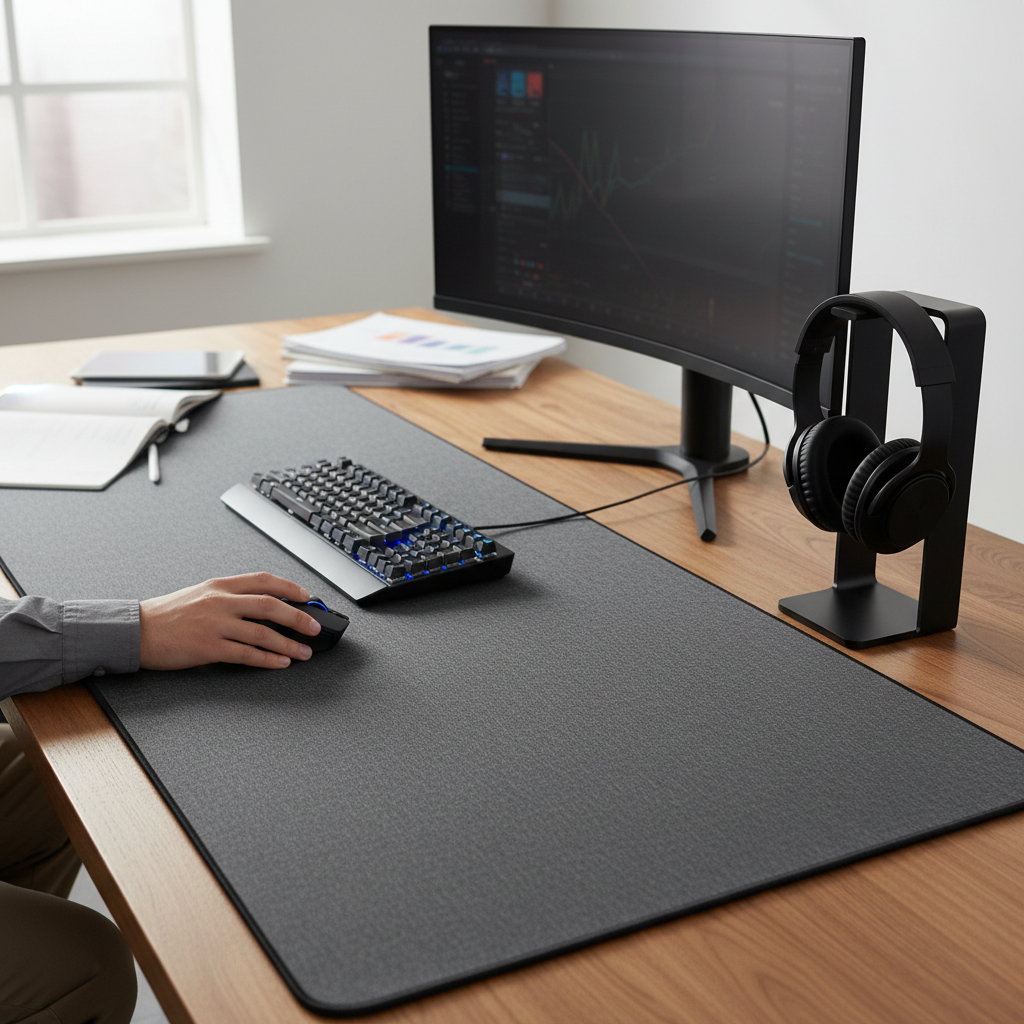
[image-1|large-gaming-mouse-pad-desk|A wide shot of a clean, large gaming mouse pad covering a desk, with a keyboard and mouse placed on it. The pad is dark cloth, showing ample space around the peripherals. Focus on functionality and size.|
A sleek, spacious dark gray cloth gaming mouse pad extending across a modern wooden desk, perfectly accommodating a mechanical keyboard and a gaming mouse. The lighting is soft and ambient, highlighting the smooth, consistent surface and showing off the generous room for movement. The photo is taken from a slightly elevated eye-level perspective, emphasizing the organized and expansive workspace.]
Surface and Material: The Core of Performance
The material and texture of a mouse pad’s surface are crucial for how your mouse tracks and glides. Different surfaces offer varying levels of speed and control, catering to diverse preferences and game genres. These surface types are available across both standard large and RGB mouse pads.
- Cloth Surfaces: These are the most common, often made from finely woven fabric. They offer a balanced feel, providing good control for precise movements while still allowing for smooth glides.
- Speed Cloth: Features a slicker, lower-friction weave, ideal for fast-paced games like MOBAs or RTS where quick cursor movements are paramount.
- Control Cloth: Has a slightly rougher, higher-friction texture, favored by FPS players who need pixel-perfect accuracy and stopping power.
- Hard Surfaces: Typically made from plastic, polycarbonate, or even glass. These pads offer extremely low friction, resulting in very fast glides. They are easy to clean but can be noisier and less forgiving on mouse feet. Razer’s Atlas, a tempered glass pad, exemplifies this category, offering ultra-smooth movement.
- Hybrid Surfaces: These aim to combine the best of both worlds, offering a fast glide akin to hard pads but with some of the stopping power and comfort of cloth. Razer Strider Chroma is a notable hybrid that also incorporates RGB lighting.
Underneath, most quality mouse pads feature a rubber or neoprene base to prevent slipping, ensuring the pad stays firmly in place during intense use. Stitched edges are also a common feature, preventing fraying and extending the pad’s lifespan. When RGB lighting is integrated, the core surface material often remains the same, with the lighting elements carefully incorporated around the edges or beneath the primary surface.
The Dazzling World of RGB Mouse Pads
While a large mouse pad focuses on functional space, an RGB mouse pad introduces an element of visual flair and customization that can transform your entire desk aesthetic.
Illuminating Your Setup: The Aesthetic Power of RGB
RGB mouse pads are all about the experience. They bring vibrant, customizable lighting to your desktop, acting as a visual extension of your gaming rig. With millions of colors and various dynamic effects—from static hues to pulsating waves and reactive lighting—an RGB pad allows you to personalize your space and synchronize with other RGB peripherals like keyboards, mice, and headsets. This visual cohesion creates an immersive atmosphere, enhancing the “wow” factor of your setup, especially for streamers and content creators who want to showcase a professional and dynamic environment.
“RGB isn’t just about looking cool; it’s about setting a vibe. When your desk lights up in sync with your game, it creates an immersive gaming atmosphere, adding that ‘wow factor’ to your setup.”
Behind the Glow: How RGB Lighting Works
An RGB mouse pad typically incorporates LED strips along its edges or, in some advanced models like the Razer Firefly V2 Pro, underneath a translucent surface for full backlighting. These LEDs are connected to a circuit control system, usually powered via a USB connection to your PC. Software applications, such as Razer Synapse or Corsair iCUE, allow users to customize colors, brightness levels, lighting patterns, and even synchronize effects across different devices. Some pads use reflective surfaces to diffuse the light evenly, ensuring a consistent and impressive visual display.
Performance vs. Pizzazz: Do RGB Lights Enhance Gameplay?
It’s important to clarify that, generally, RGB lighting does not directly improve mouse accuracy, tracking, or comfort. The primary benefit is aesthetic. While some advanced reactive lighting could theoretically offer visual cues in certain games, for the vast majority of users, the performance gains are negligible compared to the core functionality of the pad’s surface and size. The value of an RGB mouse pad lies in its ability to enhance the immersive experience and personalize your gaming environment, rather than boosting in-game stats.
Large Mouse Pad vs. RGB Mouse Pad: A Direct Showdown
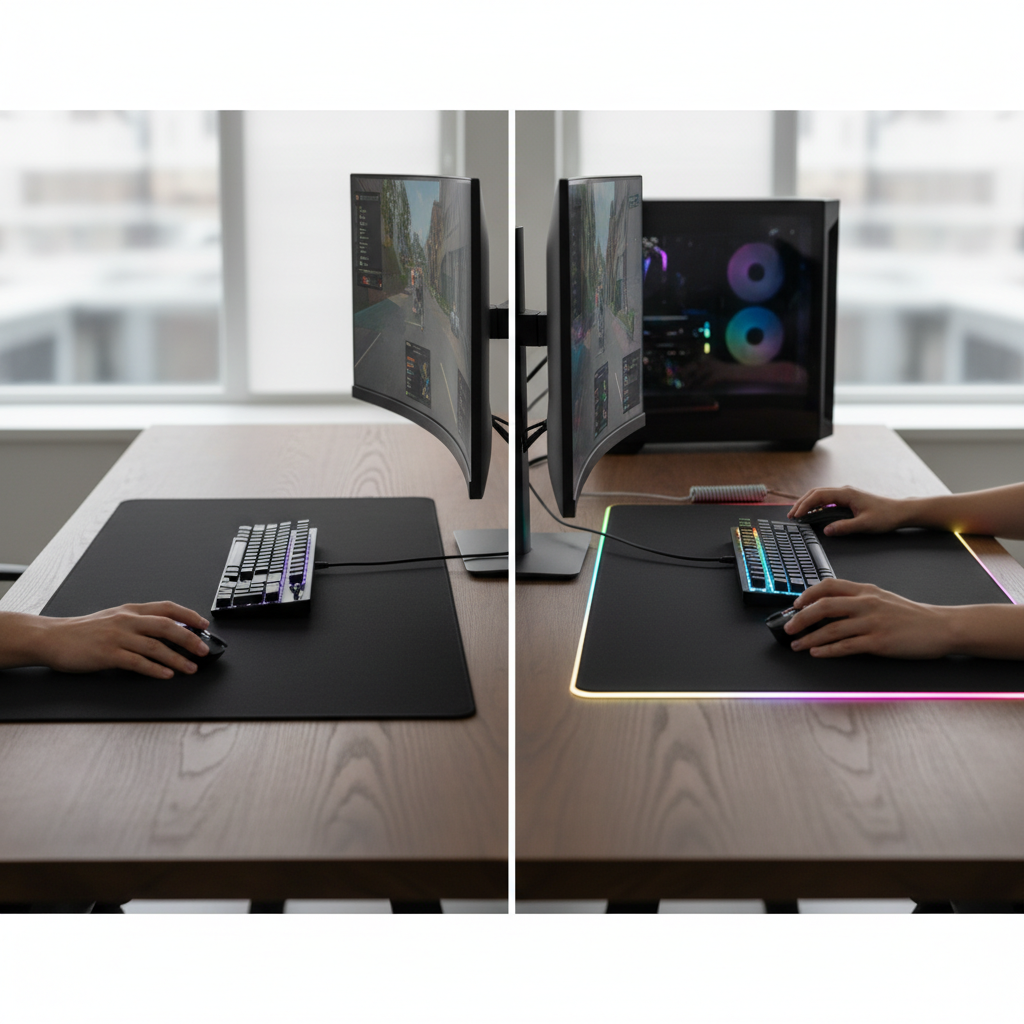
Now that we understand the core characteristics of each, let’s put large mouse pads and RGB mouse pads head-to-head. Often, the choice isn’t mutually exclusive, as many large mouse pads also feature RGB lighting. The real comparison comes down to prioritizing space and pure functionality versus visual appeal and ecosystem integration.
Functionality vs. Flair
- Large Mouse Pad: Prioritizes unhindered mouse movement, ergonomic comfort, and a unified workspace. Its benefits are directly tied to performance and user well-being during extended computer use.
- RGB Mouse Pad: Focuses on aesthetic enhancement and personalization. It adds visual appeal and can make your setup more dynamic and immersive. While the underlying surface still provides performance, the RGB aspect itself is primarily decorative.
Price Point & Value
RGB mouse pads typically come with a higher price tag than their non-RGB counterparts of similar size and quality. The added cost covers the integrated LEDs, control circuitry, and sometimes the proprietary software required for customization. For budget-conscious users or those who prioritize raw performance over aesthetics, a high-quality non-RGB large mouse pad often offers better value. However, for enthusiasts who invest heavily in a themed or synchronized RGB setup, the added cost is often justified by the complete aesthetic experience.
Desk Real Estate & Cable Management
While both large and RGB mouse pads can be expansive, RGB pads introduce an additional consideration: cable management. Most RGB pads require a USB connection to power the lighting, meaning an extra cable on your desk. This can add clutter, especially if you’re striving for a minimalist setup. A standard large mouse pad, on the other hand, is a single, unpowered piece, simplifying cable management.
Durability Considerations
The durability of the mouse pad surface itself is generally consistent between RGB and non-RGB versions of similar quality. However, RGB mouse pads introduce electronic components (LEDs, wiring, control units) that can be points of failure. While reputable brands design these to be robust, the lighting elements can potentially wear out or become damaged over time, especially if not handled with care during cleaning or transport.
The Best of Both Worlds: Large RGB Mouse Pads
It’s crucial to note that “Large” and “RGB” are not mutually exclusive. Many of the best mouse pads on the market are large RGB mouse pads, combining the expansive surface area for optimal performance with the vibrant, customizable lighting for aesthetic appeal. These “desk mats” offer full coverage, accommodating your keyboard and mouse, all while illuminating your workspace with dynamic colors. For many users, this integrated solution provides the ultimate balance of functionality and style.
Navigating the Market: Popular Brands and Key Features
When choosing between a large, an RGB, or a large RGB mouse pad, several leading brands offer compelling options, each with their unique strengths.
- Razer: Known for its extensive Chroma RGB ecosystem, Razer offers a range of large and RGB pads. The Razer Goliathus Chroma and Razer Strider Chroma (a hybrid surface) are popular large RGB choices. The Razer Firefly V2 Pro stands out as one of the few fully backlit RGB hard pads. Razer’s Synapse software provides deep customization for lighting synchronization.
- SteelSeries: The SteelSeries QcK line is legendary for its quality cloth surfaces, available in a multitude of sizes, including extra-large and heavy versions. The QcK Prism series integrates 2-zone RGB lighting into these classic designs, offering a blend of performance and aesthetics.
- Corsair: With products like the CORSAIR MM700 RGB Extended, Corsair provides large cloth mouse pads with multi-zone RGB lighting and sometimes even integrated USB pass-through ports, enhancing connectivity.
- Logitech: Offers reliable large pads like the Logitech G840, known for its balanced surface. While they have some RGB peripherals, their mouse pad focus tends to be more on core performance.
- HyperX, Glorious, and ASUS ROG: These brands also offer a variety of large and RGB options, catering to different preferences in surface types, sizes, and lighting features.
When comparing, consider the quality of the surface, the thickness of the pad, the presence of stitched edges, the non-slip base, and for RGB pads, the number of lighting zones, the brightness, and the accompanying software’s customization capabilities.
Curating Your Command Center: A Comparison Table
To help you visualize the options, here’s a comparison of some popular large mouse pads, including both non-RGB and RGB models:
| Product Name | Size (approx.) | Surface Type | RGB Lighting | Material | Price Range (USD) | Pros | Cons |
|---|---|---|---|---|---|---|---|
| SteelSeries QcK Heavy XXL | 900 x 400 x 6 mm | Cloth (Control) | No | Micro-woven cloth, rubber base | $30 – $40 | Excellent control, thick cushioning, highly durable | No RGB, can collect dust |
| Razer Gigantus V2 XXL | 940 x 410 x 4 mm | Cloth (Balanced) | No | Micro-weave cloth, foam base | $30 – $40 | Great balance of speed/control, durable, clean look | No RGB |
| Razer Goliathus Chroma Extended | 920 x 294 x 3 mm | Cloth (Speed) | Yes | Micro-textured cloth, rubber base | $40 – $60 | Vibrant RGB, good speed, Synapse integration | Slightly narrower for some keyboards, extra cable |
| CORSAIR MM700 RGB Extended | 930 x 400 x 4 mm | Cloth (Speed) | Yes | Glide-enhanced cloth, rubber base | $50 – $70 | Bright RGB, USB pass-through, large surface | Requires USB power, might be too fast for some control-focused users |
| Razer Strider Chroma | 900 x 370 x 3 mm | Hybrid | Yes | Textured polyester, anti-slip base | $80 – $100 | Fast glide with control, water-resistant, durable RGB | Higher price, hybrid surface feel isn’t for everyone |
| Logitech G840 XL | 900 x 400 x 3 mm | Cloth (Balanced) | No | Performance-tuned fabric, rubber base | $30 – $45 | Consistent tracking, comfortable, good stability | No RGB, prone to showing dirt |
| SteelSeries QcK Prism XL | 900 x 300 x 4 mm | Cloth (Balanced) | Yes | Micro-woven cloth, rubber base | $50 – $70 | 2-zone RGB, reliable surface, durable | Can be pricey, not as deep as other extended pads |
Making the Right Choice: Your Buying Guide
Selecting the perfect mouse pad involves weighing your priorities and understanding your own usage habits.
- Identify Your Needs: Are you a competitive gamer needing maximum space for low-DPI movements, a casual user who values desk aesthetics, or a professional who requires ergonomic comfort for long hours?
- Assess Your Space: Measure your desk to ensure the chosen mouse pad, especially a large or extended model, fits comfortably without hanging off the edges. Remember, RGB pads also need space for their control unit and cable.
- Consider Surface Preference: Do you prefer the fast glide of a hard or speed cloth pad, or the precise control of a control cloth surface? Test different textures if possible.
- Determine Your Budget: High-quality large mouse pads can be affordable, while RGB models often fall into a higher price bracket.
- Aesthetic Integration: If you have an existing RGB setup, choosing an RGB mouse pad that can synchronize with your other peripherals can create a stunning, cohesive look. If you prefer a minimalist look, a non-RGB large pad might be better.
- Read Reviews: User reviews can offer valuable insights into durability, comfort, and real-world performance.
Preserving Your Pad: Care and Maintenance
Proper care extends the life of any mouse pad. For both large and RGB pads, regular cleaning is essential to maintain optimal tracking and hygiene.
- Cloth Mouse Pads: Gently hand wash with mild soap and lukewarm water. Avoid harsh chemicals or machine washing, especially for RGB models. Air dry completely before use. A lint roller can help remove dust and debris between washes.
- Hard Surface Mouse Pads: These are generally easier to clean; a damp cloth with a mild cleaner is often sufficient.
- RGB Mouse Pads: Be extra cautious around the lighting elements and control unit. Avoid submerging the pad. If the lighting strip is around the edge, clean the surface gently, taking care not to pull on wires. Disconnect the USB cable before cleaning. Always refer to the manufacturer’s cleaning instructions.
Conclusion
In the debate of Large Mouse Pad vs. RGB Mouse Pad, there’s no single “best” option. The ideal choice ultimately depends on your individual priorities. If expansive, unhindered movement and ergonomic comfort are paramount, a large mouse pad is an indispensable tool that directly impacts performance and well-being. If you crave a vibrant, personalized workspace that stands out and integrates with your broader aesthetic, an RGB mouse pad adds an exciting dimension.
The good news is that you don’t always have to choose. Many products effectively combine the best attributes of both, offering large, extended surfaces adorned with dazzling RGB lighting. By carefully considering your usage, desk space, budget, and aesthetic preferences, you can find the perfect mouse pad to complete your setup and enhance every click, swipe, and scroll.
What features do you prioritize most in your ideal mouse pad: sheer size, dazzling lights, or a perfect blend of both?
Câu Hỏi Thường Gặp
Do RGB mouse pads actually improve gaming performance?
While RGB mouse pads create an immersive atmosphere and allow for extensive customization, they do not inherently improve gaming performance, mouse accuracy, or tracking. Their primary benefit is aesthetic, enhancing the visual appeal of your setup. Any performance gains would stem from the quality of the underlying surface, not the lighting itself.
Are large mouse pads suitable for small desks?
Large mouse pads, especially extended or desk-sized versions, require significant desk space. If you have a small desk, a large pad might overwhelm your setup or hang off the edges, which can be uncomfortable and impede mouse movement. Measure your desk carefully before investing in an oversized pad.
Can I turn off the RGB lights on an RGB mouse pad?
Yes, most RGB mouse pads come with software (like Razer Synapse or Corsair iCUE) or even a physical button that allows you to customize the lighting, including turning it off completely. This offers flexibility if you prefer a less flashy look or want to save power.
What’s the main difference between “speed” and “control” mouse pad surfaces?
A “speed” surface typically has a smoother, lower-friction texture, allowing for rapid mouse movements and quick flicks, favored by MOBA or RTS players. A “control” surface has a slightly rougher, higher-friction texture, providing more resistance for precise, pixel-perfect aiming, often preferred by FPS gamers.
Are RGB mouse pads more difficult to clean than regular ones?
RGB mouse pads require a bit more care during cleaning due to their integrated electronic components. While the surface can often be cleaned similarly to non-RGB pads (e.g., hand washing cloth pads), it’s crucial to avoid submerging the pad and to be gentle around the LED strips and control unit to prevent damage to the wiring or electronics.